


Share
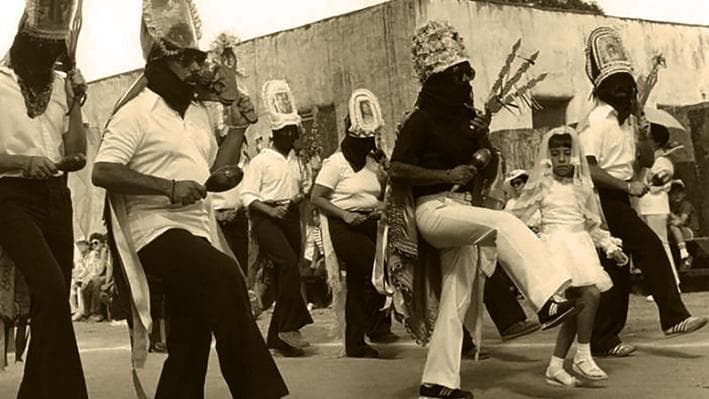

Folk Dance and Drama in Los Matachines
6th Grade – 8th Grade
9th Grade – 12th Grade
English
Explore how Los Matachines, a folk dance drama performed during special fiestas and feast days by both Hispanic and Native American groups, combines European and Indigenous traditions to depict the battle between Christianity and paganism. Throughout the dance, the story unfolds with violins and guitars accompanying the dancers as they weave in and out among each other.
It is generally thought that Los Matachines is a tradition derived from a genre of medieval folk dramas symbolizing conflict between the Christians and the Moors. The Spanish may have brought this dance drama to the Americas and employed this song form as a vehicle for Christianizing the Native Americans.
In its simplest storytelling form, Los Matachines enacts the triumph of good over evil. The characters include the Monarca (Monarch); La Malinche (the little girl or bride); El Toro (the bull); the Matachine dancers who usually number 12; and Los Abuelos (two clowns whose purpose is to provide entertainment and keep the spectators from interfering with the dancers). Los Matachines employs polka-like dance steps performed to guitar and violin music. Some New Mexico pueblos include a drum as part of the accompaniment.
This resource contains teaching tips, background reading, discussion questions, and vocabulary to help contextualize student analysis.