


Share

How Studying the Ocean Floor Explains the History of Earth’s Climate | PBS NewsHour
6th Grade – 8th Grade
9th Grade – 12th Grade
English
Directions: Read the summary, watch the videos and answer the discussion questions below. You may want to read along with the transcript here.
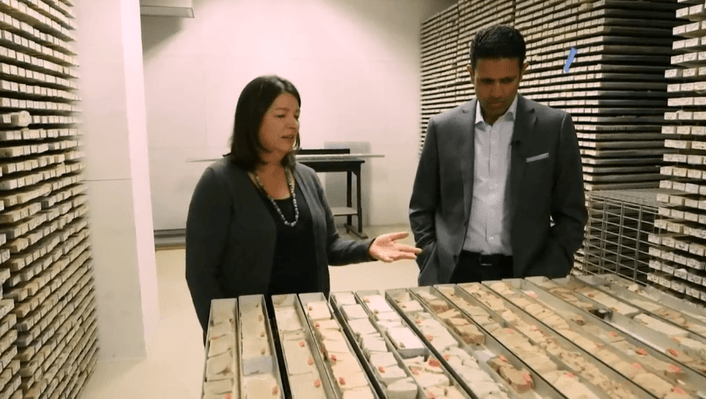
Summary: To understand the history of climate change, researchers are digging underneath the ocean floor where organisms and plants have accumulated in sediment over millennia. Columbia University’s Lamont-Doherty Earth Observatory holds samples taken from the Earth’s ocean floor, a collection that has taken over half a century to build. One of the great scientific advances that came out of the Lamont core repository was the proof of the theory of the ice ages and this understanding that the ice ages come and go caused by variations in the Earth’s orbit around the sun.
“So right now, the Earth’s orbit should be making the Earth cooler in the Northern Hemisphere,” according to Maureen Raymo, a marine biologist and director of the core repository, “And we’re observing it’s warmer, and that’s obviously because we’re putting so much greenhouse gases into the atmosphere very quickly.” The repository collects samples from oceans all around the world and sends them to scientists to study. There are still many places to explore and many uncertainties about what happened in the past especially around Antarctica.
April 8, 2019 video and resource materials from PBS NewsHour.
Check out our Daily News Story collection, or find more at PBS NewsHour Extra.